


Healthcare and life sciences are entering a new era of transformation, driven by a powerful evolution in artificial intelligence: Agentic AI. Unlike traditional AI systems that passively analyze and recommend, Agentic AI systems can understand context, set goals, reason across systems, and take autonomous actions.
From accelerating clinical trials and automating documentation to driving proactive population health, Agentic AI has the potential to radically improve outcomes, reduce costs, and unlock new levels of innovation.
In this playbook, Apexon shares its strategic framework for adopting Agentic AI in healthcare and life sciences. Combining deep domain expertise, advanced engineering, and a commitment to human-centered design, we provide a clear path to deploy intelligent, scalable, and responsible AI systems that act, not just analyze.

Also Read: AI in Denial Management – A Smarter Approach to Claims
The Evolution: From Passive AI to Agentic Intelligence
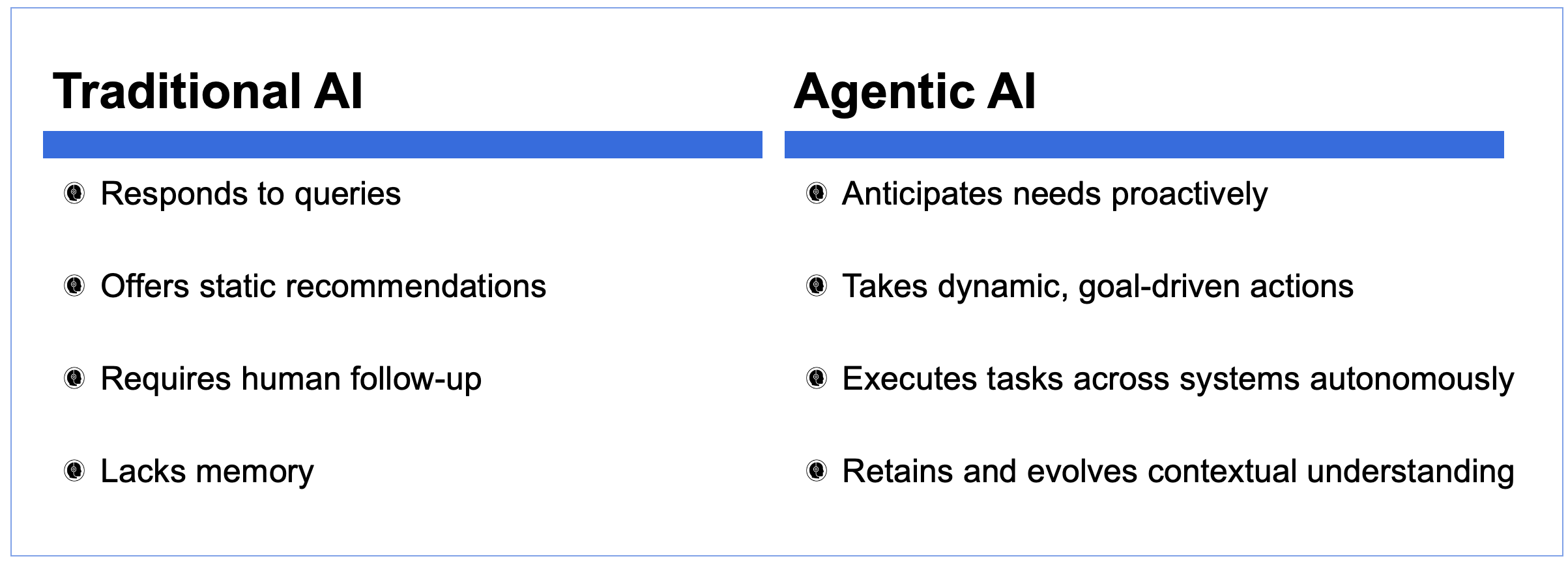
Over the last decade, healthcare organizations have made strides in using AI and machine learning to extract insights and automate simple workflows. But most systems remain static. They require human prompts, rely on predefined logic, and stop short of execution.
Agentic AI represents a major leap forward.
These intelligent agents:
- Understand dynamic patient and research contexts.
- Define and pursue evolving goals (e.g., reducing readmissions or accelerating trials).
- Collaborate with stakeholders and systems.
- Learn and adapt continuously through real-world feedback.
Also Read: Designing the Future of Digital Healthcare: Empowering Patients Through User-Centric Experiences
Agentic systems enable orchestration, not just observation, making them uniquely suited for high-stakes healthcare environments that demand both precision and speed.
Why Now? Five Forces Driving Agentic AI Adoption
Several powerful trends are converging to make Agentic AI a strategic imperative:
- Rising Pressures: Aging populations, chronic disease, and workforce shortages are straining healthcare systems.
- Data Proliferation: The proliferation of data from genomics, imaging, wearables, EHRs, and unstructured clinical notes has outpaced traditional tools.
- Clinician Burnout: Administrative burden continues to erode quality of care and staff retention.
- Digital Expectations: Patients and members demand real-time, personalized, seamless experiences.
- AI Readiness: Advances in foundation models, orchestration layers, and contextual learning make Agentic AI feasible and powerful today.
Organizations that act now will secure long-term advantages in care quality, operational agility, and innovation velocity.
What Makes Agentic AI Different?
Also Read: Synthetic Data: Powering Future of AI in Healthcare and Life Sciences
Agentic AI is especially valuable in complex environments where decisions depend on evolving clinical, operational, or research contexts and where time-to-action is critical.
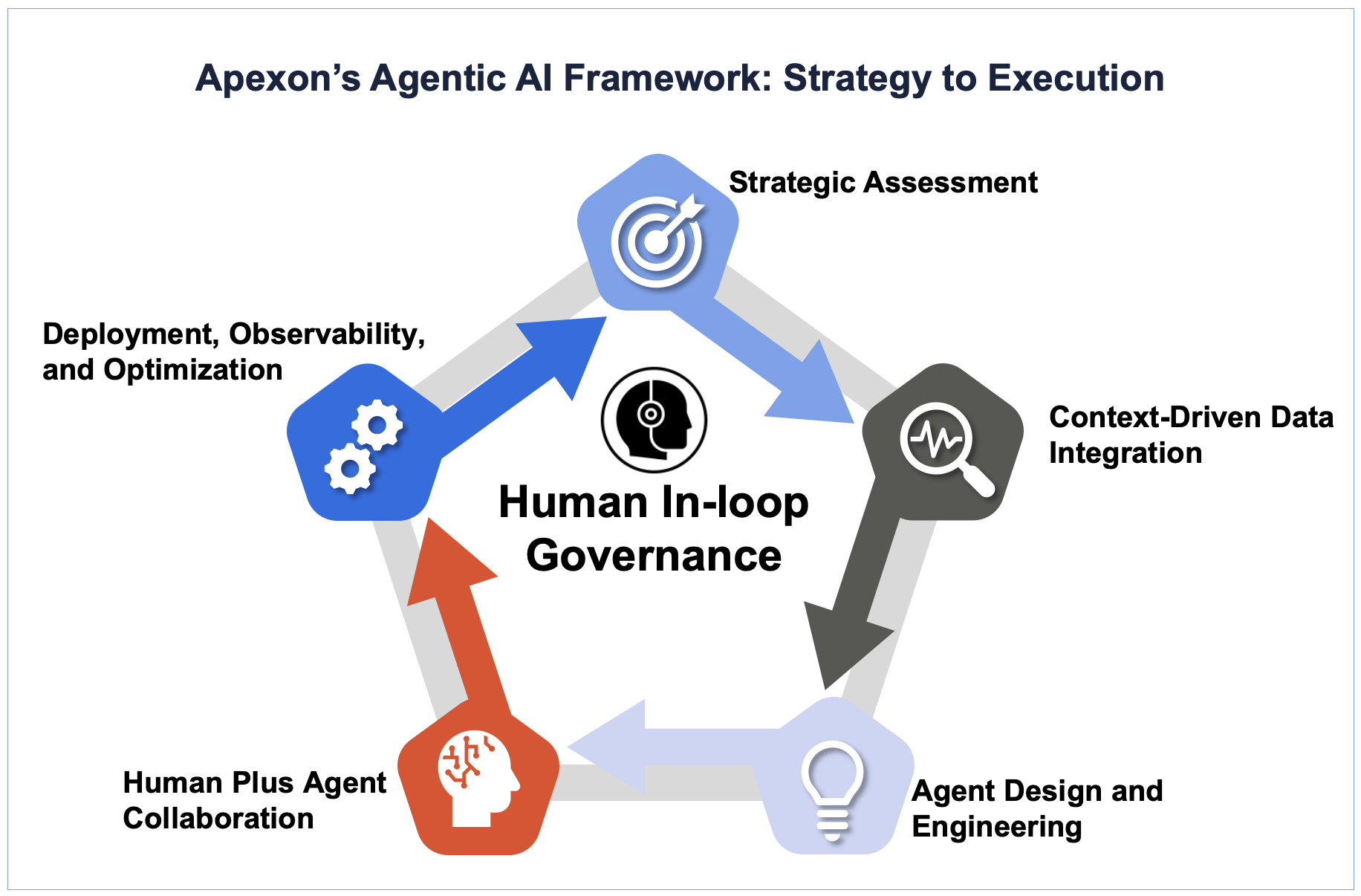
Apexon’s Agentic AI Framework: Strategy to Execution
Apexon has distilled best practices for operationalizing Agentic AI into a multi-stage framework. Each stage combines strategy, technology, and governance, structured for clarity yet adaptable to enterprise contexts.
1. Strategic Assessment
First, evaluate AI readiness across functions and technology landscape. Identify and prioritize use cases with the highest ROI potential and feasibility. Develop value models that articulate expected benefits: cost reduction, efficiency gains, improved outcomes or speed of research. This stage ensures executive alignment and a business-driven roadmap.
2. Context-Driven Data Integration
Building a unified context model is critical. Using methods such as a Multiple Context Protocol, integrate diverse data: EHRs, lab systems, imaging, genomics, claims, wearables, patient-reported outcomes and unstructured clinical notes. Apply semantic enrichment and graph-based models so agents can reason over relationships (for example: linking lab trends with medication history and social determinants). This foundation enables agents to interpret evolving scenarios accurately.
3. Agent Design and Engineering
Design goal-oriented agents for targeted tasks: triage and symptom assessment, On the front lines of patient communication, solutions like Telnyx AI-powered voice agents can handle inbound symptom triage calls at scale, freeing clinical staff to focus on cases that require direct intervention. clinical decision support, automated documentation, prior authorization assistance, research protocol drafting, literature review automation, virtual cohort simulation. Build multi-agent orchestration patterns: agents collaborate, share memory, plan sequences of actions, and escalate or defer to human experts when needed. Employ prompt engineering and LLM tuning for reliability. Embed explainability layers so decisions and actions remain transparent to stakeholders.
4. Human Plus Agent Collaboration
Adoption depends on trust. Create intuitive user interfaces and workflows where clinicians, researchers, payers and administrators can interact seamlessly with agents. Embed override controls and clear audit trails so humans remain in control. Establish feedback loops: user inputs refine agent behavior over time. Emphasize explainability and transparency so stakeholders understand why an agent acted in a certain way.
5. Deployment, Observability, and Optimization
Implement robust MLOps and AIOps pipelines to manage model versions, updates, scaling, and monitoring. Set up real-time observability dashboards tracking agent performance, safety metrics, and key outcome signals. Define guardrails for safety and compliance, with automated alerts if agents deviate from expected behavior. Enable continuous learning: feed real-world outcomes back into retraining or fine-tuning cycles.
In practice, these stages overlap and iterate. Pilots generate lessons that refine strategic priorities and data integration approaches. Continuous monitoring informs further engineering improvements and governance enhancements.
Impact Across Healthcare Segments
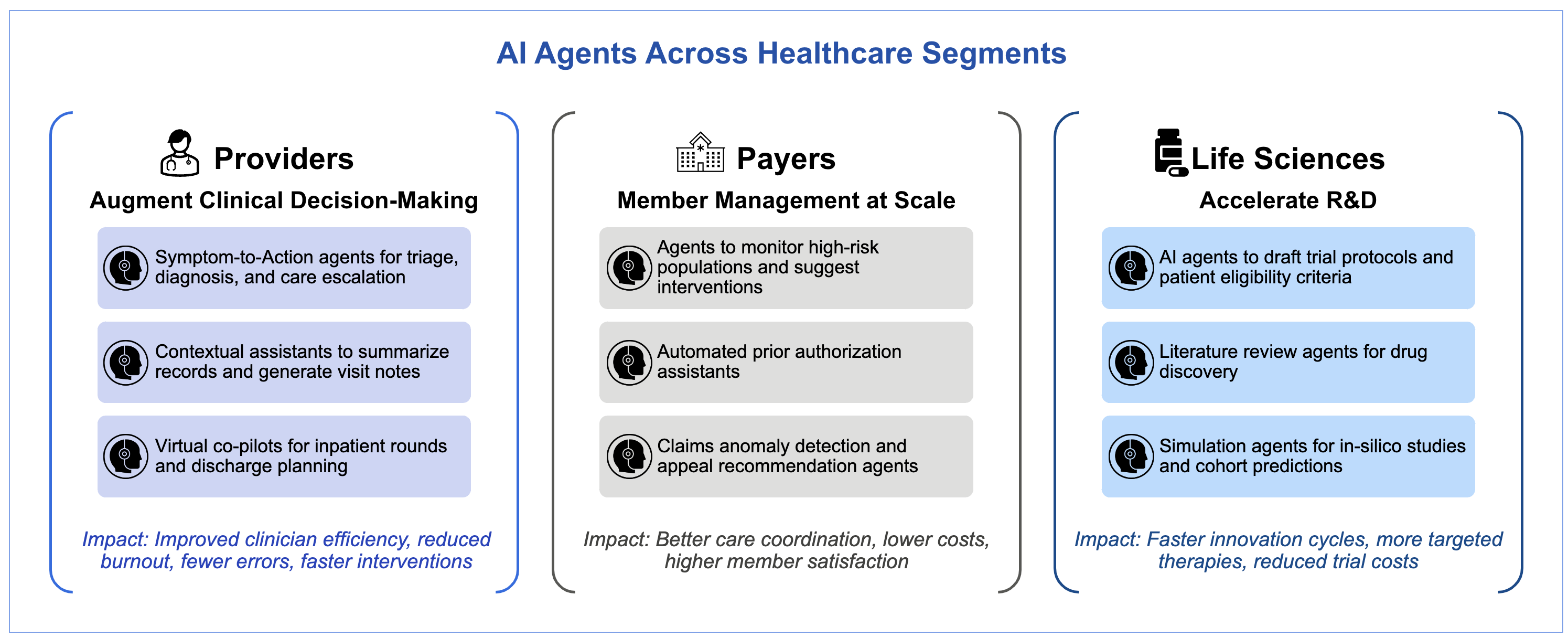
Agentic AI delivers tangible benefits in different segments. Brief introductory sentence followed by bullets under each segment:
- Providers
Intelligent agents can assist in symptom triage, recommend next best steps, and escalate to appropriate care. They summarize patient histories and generate draft visit notes or discharge plans, reducing documentation burdens. Virtual co-pilots support inpatient rounds by aggregating patient data, highlighting risk factors, and suggesting interventions. The cumulative effect includes improved clinician efficiency, reduced errors, and faster, proactive care delivery. - Payers
Agents monitor high-risk populations continuously, flagging members who may need early interventions. Automated prior authorization assistants extract relevant data from records, streamline submission, and notify clinicians or patients of required actions. Claims processing agents detect anomalies, recommend appeals strategies, and optimize workflows. These capabilities can lower costs, improve care coordination, and boost member satisfaction. - Life Sciences
In R&D, Agentic AI agents draft clinical trial protocols based on historical data, suggest eligibility criteria, and simulate virtual patient cohorts to estimate enrollment feasibility. Literature review agents continuously scan publications, patents, and trial registries to surface novel insights. Simulation agents model in-silico experiments or predict adverse events. Together, these accelerate discovery cycles, focus resources on the most promising therapies, and reduce trial timelines and costs.
Getting Started: Your Agentic AI Playbook
To realize the value of Agentic AI, organizations must:
- Identify high-impact agent opportunities in clinical ops, patient engagement, and R&D
- Map data infrastructure and create unified context models
- Pilot with narrow, well-defined agent roles (triage, documentation, trial screening)
- Design feedback-rich workflows that evolve agents with clinician or researcher input
- Invest in observability and safety to build trust and scale responsibly
Apexon can support you across this journey, from pilot to platform.
Conclusion: The Agentic Future Is Here
Healthcare and life sciences demand intelligent systems that don’t just analyse, they act. Agentic AI offers the blueprint for this transformation. By embedding intelligence into workflows, augmenting human decision-making, and creating adaptive care and research processes, organizations can unlock a new era of precision, efficiency, and impact.
With Apexon as your innovation partner, you can harness the power of Agentic AI to solve your most complex challenges and lead your industry forward.