Legacy systems were built for stability—and for a long time, they delivered it. But in today’s cloud-first, AI-driven economy, stability alone isn’t enough. Enterprises need systems that are agile, intelligent, and responsive to constant change. That’s where modernization plays a critical role—not just as a technical upgrade, but as a business enabler.
According to MarketsandMarkets, the global application modernization services market is projected to reach $39.6 billion by 2029, growing at 14.9% CAGR. This reflects a growing recognition: legacy systems, while essential, are becoming constraints in a world that rewards adaptability and speed.

In large-scale transformation efforts, I’ve seen the most success when modernization is approached across four critical dimensions: adaptive experiences, business services, autonomous operations, and connected ecosystems. These pillars not only provide strategic direction but also align closely with what modern cloud platforms—like AWS—are designed to support.
Also Read: Understanding Agentic Systems in Modern Technology
1. Adaptive Experiences
Modern users—internal and external—expect fast, intuitive, and personalized digital experiences. They don’t engage with applications the same way they did five years ago, and our systems need to reflect that shift.
AWS services like Amazon CloudFront, AWS Amplify, and Amazon Personalize enable the kind of global, real-time responsiveness today’s environments demand. But to stand these up quickly and securely, frameworks like Apexon’s CloudAlphaTM can be instrumental. It allows teams to provision a secure cloud foundation in minutes, reducing the time it takes to move from idea to interaction.
When combined with adaptive UI strategies and GenAI-driven personalization, we’re seeing organizations deliver far more context-aware user journeys—at scale.
2. Business Services
Modernization often exposes one of the biggest bottlenecks in IT: the monolith. These tightly coupled systems restrict agility, slow innovation, and make integration painful.
Here, containerized and serverless strategies—using AWS Lambda, API Gateway, ECS, and EKS—help decouple functionality into composable business services. But code modernization itself remains a complex task.
That’s where intelligent automation matters. With Apexon’s PlatformAlphaTM, we’ve seen teams accelerate code transition from mainframe languages like JCL and COBOL to cloud-native stacks like Java or Go—making it possible to get to a target-state architecture faster, with less manual effort. It’s not just about breaking apart the monolith—it’s about re-architecting for agility from the ground up.
Also Read: Unleashing the Power of Azure AutoGen and AI Bots
3. Autonomous Operations
Operations today can’t be reactive. With increasing complexity, systems need to self-monitor, self-heal, and self-optimize. This isn’t futuristic thinking—it’s what high-performing digital organizations are already doing.
AWS provides the foundational tooling—SageMaker for intelligent models, CloudWatch for observability, and Systems Manager for hybrid environment control. But the real shift happens when these tools are orchestrated intelligently.
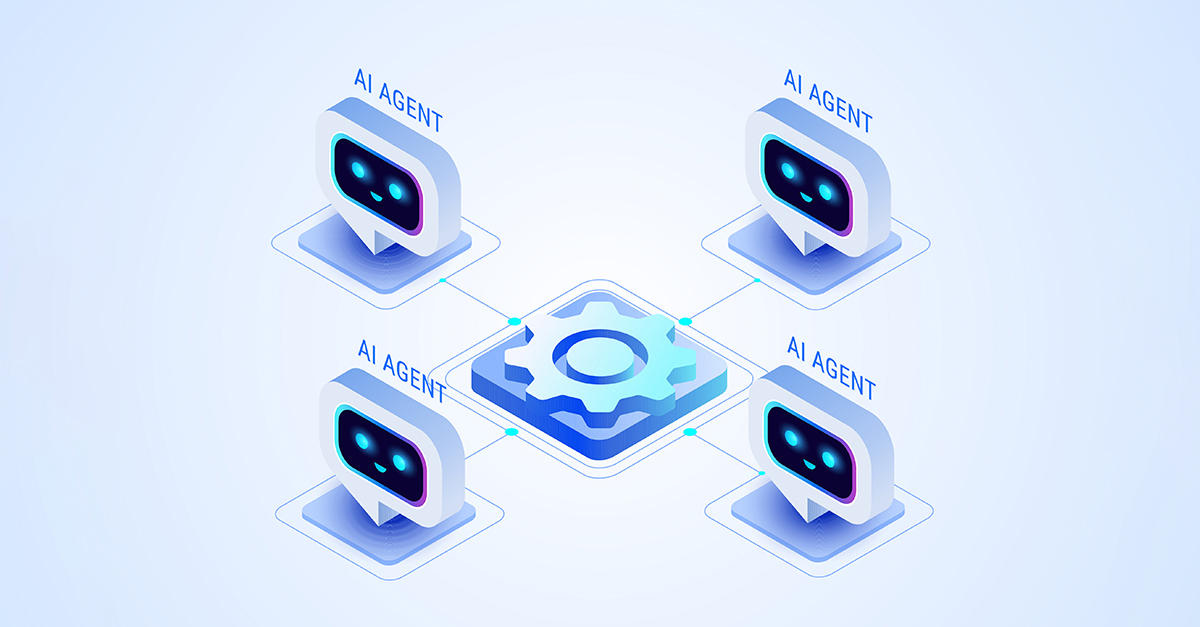
We’re starting to embed GenAI models directly into operational flows using tools like Apexon’s TransformAlphaTM, which applies intelligent automation to streamline repetitive modernization tasks. This enables teams to focus on oversight and optimization, rather than heavy lifting.
4. Connected Ecosystems
Modern enterprises operate in ecosystems, not silos. From APIs to partner integrations, the ability to connect and collaborate securely across platforms has become fundamental.
With AWS tools like PrivateLink, EventBridge, and AppFlow, enterprises are designing architectures that are not only integrated but inherently collaborative. This is critical in industries like healthcare or financial services, where agility must coexist with compliance and control.
By combining these capabilities with Apexon accelerators like PlatformAlphaTM—which supports both public and private cloud deployment paths—we’re enabling teams to move between environments while maintaining architectural consistency and integration fidelity.
Modernization in Motion
Modernization today requires more than migration. It requires orchestration—of platforms, processes, and people. The accelerators we use—whether from AWS or frameworks like CloudAlphaTM, PlatformAlphaTM, and TransformAlphaTM—are not shortcuts, but scaffolds. They provide structure, speed, and confidence in what is otherwise a deeply complex initiative.
By anchoring transformation around adaptive experiences, modular services, intelligent operations, and connected ecosystems, we don’t just upgrade IT—we reengineer it for relevance.
As the cloud continues to mature, and AI becomes further embedded into engineering practices, the modernization decisions we make today will shape not just our architecture—but our ability to innovate, compete, and scale in the years ahead.
Also read: Building Developer Velocity with Confidence-Now Backed by Microsoft Specialization