The Human–Agent Partnership in BFSI Engineering
Software development has always evolved alongside the tools engineers use, but the rise of agentic AI is beginning to reshape something deeper—the structure of engineering work itself. Agentic AI is no longer simply improving how developers write code; it is redefining how engineering tasks are organized, executed, and delivered.
For financial services organizations operating in highly regulated environments, this shift carries particular significance. These institutions must consistently deliver secure, compliant, and customer-centric digital capabilities while navigating some of the most complex regulatory and legacy landscapes in the technology industry.
Also Read: Progressive Core Modernization: The Strategic Path to Future-Ready Banking
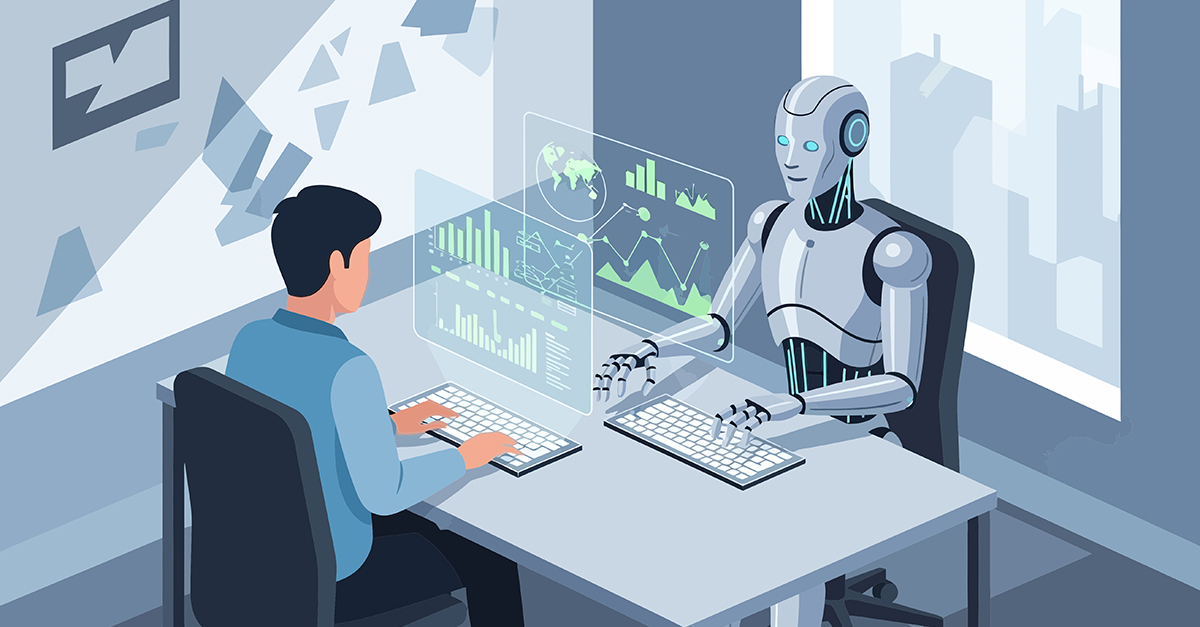
In this context, the emergence of agentic AI marks an important turning point. Instead of acting as isolated assistants that generate code snippets or suggestions, agentic AI systems can reason about objectives, maintain context across workflows, and execute defined tasks with increasing autonomy. The real transformation, however, is not about replacing developers but about creating a powerful human + agent partnership that fundamentally changes how engineering productivity is achieved.
From Assistance to Collaboration: The Human–Agent Model
Early generations of AI-powered development tools focused on helping developers complete specific tasks faster—generating boilerplate code, suggesting optimizations, or identifying potential bugs. Agentic AI represents a more advanced model in which systems participate actively in the development workflow.
Within clearly defined guardrails, these systems can analyze large codebases, generate comprehensive test scenarios, evaluate performance bottlenecks, and iterate on implementation approaches while preserving awareness of both engineering and business context.
One practical way to understand this shift is through what many forward-leaning teams are beginning to experience. A developer wraps up their day in the evening with a partially completed feature that still requires unit tests, documentation, or performance tuning. The developer provides the relevant context, objectives, and domain guidelines to an agent.
Overnight, within those boundaries, the agent continues the work by generating test cases, refining code structure, surfacing potential issues, and suggesting improvements aligned with compliance requirements. When the developer returns the next morning, meaningful progress has already been made while human judgment remains central to the process. The focus can immediately shift to review, architectural refinement, and higher-value decision-making.
This “sunset to sunrise” model creates a continuous productivity cycle in which machines handle continuous execution while developers concentrate on design, system thinking, and complex problem-solving. This is especially valuable in BFSI environments where regulatory and operational nuances require strong human oversight.
Also Read: AI Governance in BFSI – Real-World Applications and Strategic Impact (Part 2)
Adoption Patterns: A Shift Across Experience Levels
In conversations with clients and engineering leaders, an interesting pattern is beginning to emerge in how agentic AI is being adopted across teams.
Adoption tends to be strongest at two ends of the experience spectrum. Junior developers are actively using agentic AI to accelerate learning, explore unfamiliar technologies, and improve coding efficiency. Senior architects and experienced technologists are leveraging it to prototype ideas, evaluate design alternatives, and reduce time spent on routine implementation.
There are also instances where professionals in the mid-experience range—typically those with around 6 to 15 years of experience—appear more cautious in adopting these tools. In many cases, this reflects confidence in established ways of working rather than resistance to change.
This shift is important because several traditional responsibilities in this experience band—coordination, oversight, and translation between business and engineering—are increasingly being augmented by agentic AI systems.
The implication is not a reduction in relevance, but a change in expectations. Professionals in this layer have an opportunity to evolve into orchestrators of human and agent collaboration—guiding workflows, interpreting outputs, and ensuring alignment with domain and architectural priorities. Those who adapt will amplify their impact, while those who delay may find their roles becoming less differentiated over time.
Also Read: Why Most AI POCs Stall (and What the Best Teams Do Differently)
Enabling Adoption: Balancing Structure and Flexibility
Technology leaders are actively debating whether the adoption of agentic AI should be mandated or allowed to evolve organically.
Agentic AI clearly delivers meaningful productivity gains when integrated into engineering workflows. At the same time, sustained adoption depends on trust, familiarity, and a sense of ownership among teams.
The most effective organizations are therefore taking a balanced approach. They establish secure and governed platforms, define clear usage frameworks, and integrate agentic capabilities into standard engineering environments. At the same time, they encourage experimentation so that teams can discover how these tools best fit their workflows.
In regulated industries such as BFSI, this balance is critical. Organizations must ensure alignment with regulators such as SEC, FINRA, OCC, FCA,SEBI etc. Strong governance and compliance guardrails are essential to build trust, without which large-scale adoption is unlikely.
Beyond Code: Why Domain Becomes the Differentiator
As code generation becomes increasingly automated, the foundation of value creation within engineering teams is shifting. Agentic AI can produce syntactically correct code at impressive speed, but it lacks an inherent understanding of the domain—whether that’s the regulatory nuances of cross‑border payments, the risk models that underpin lending systems, the compliance expectations in financial reporting, or the customer‑experience standards in wealth management. This is precisely why deep domain expertise is becoming even more essential.
Engineers who combine technical fluency with deep understanding of financial systems, regulatory constraints, and business context will define the next generation of high-impact engineering teams. They determine the what and the why, while agentic AI increasingly supports the how.
This reinforces an important point: Agentic AI represents an operating model shift, not just a technology upgrade.
Evolving Skillsets in the Agentic Era
As agentic AI becomes embedded in software development, the skills that organizations value will continue to evolve. There will be greater emphasis on reasoning ability, problem framing, communication, and domain understanding, alongside the ability to effectively work with agentic systems, validate outputs, and integrate them into real-world environments.
This shift is also likely to influence how engineering talent is evaluated. Increasingly, organizations will look for individuals who can combine technical expertise with domain awareness and the ability to orchestrate human and agent workflows within regulated contexts. Professionals who develop this combination of skills will be best positioned to thrive in the emerging human + agent model.
A New Model of Engineering Productivity
The evolution of agentic AI should not be viewed as a competition between humans and machines. Instead, it represents the emergence of a collaborative model in which human judgment, creativity, and domain expertise are amplified by machine efficiency and continuous execution. Organizations that rethink engineering productivity around this partnership will be better positioned to accelerate innovation, respond effectively to market and regulatory changes, and build secure, resilient digital systems for the future of financial services.
The “sunset to sunrise” model illustrates how human insight and intelligent agents can work together to unlock a fundamentally new level of engineering productivity.