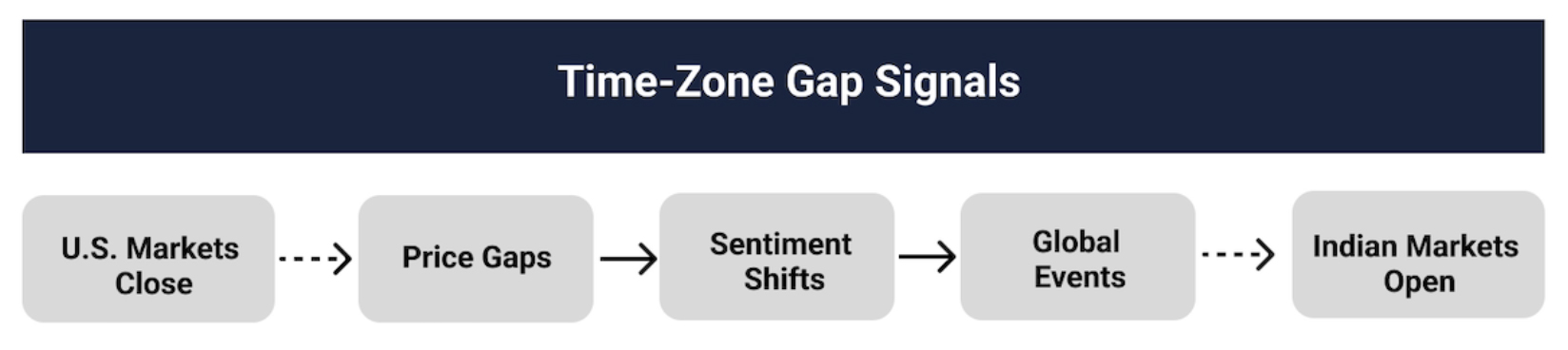
In global markets, the biggest risk is no longer data scarcity. It is timing. While Indian markets are closed, price discovery continues in the United States and Asia. Earnings releases shift valuations. Macroeconomic data changes interest rate expectations. Geopolitical developments alter capital flows. By the time Indian traders log in the next morning, much of that movement is already reflected in prices. This structural lag is what we call the time-zone gap.
Studies show that time-zone differences materially affect price efficiency. When information is released outside local trading hours, markets require additional time to fully incorporate that data. The delay creates temporary inefficiencies and informational disadvantages for participants operating in later sessions.
Traditional analytics systems are not built to address this problem. Most environments rely on batch processing and overnight refresh cycles. They summarize what happened, but do not reduce the gap between global market events and local decision readiness.

Also Read: 8 Data Management Best Practices
Why the Time-Zone Gap Is a Real Business Problem
Most analytics platforms are still built around batch cycles.
- Data is pulled in at fixed intervals.
- Models execute on preset schedules.
- Dashboards update only after the market opens.
- Analysts then step in to interpret what already happened.
This approach starts to show its limits when markets move outside your local trading window. Prices and sentiment shift overnight. Earnings or regulatory announcements are released after business hours. By the time teams log in, decisions already need to be made. Waiting for dashboards to refresh is no longer viable. The issue is not the quality of reporting. It is the delay between an event occurring and your organization being ready to respond.
Why Microsoft Fabric for Real-Time Intelligence
We chose Microsoft Fabric for a straightforward reason. Real-time intelligence only works when ingestion, analytics, AI, and action operate within a single environment. When these components are fragmented across multiple systems, latency increases and operational complexity follows. Integrating separate streaming engines, processing frameworks, warehouses, BI tools, and AI services often introduces handoffs and delays that undermine real-time goals.
Fabric brings these capabilities together natively. That architectural simplicity reduces friction, shortens response cycles, and allows teams to focus on insight and execution rather than system integration.
Ingesting Data in Real Time from Any Source
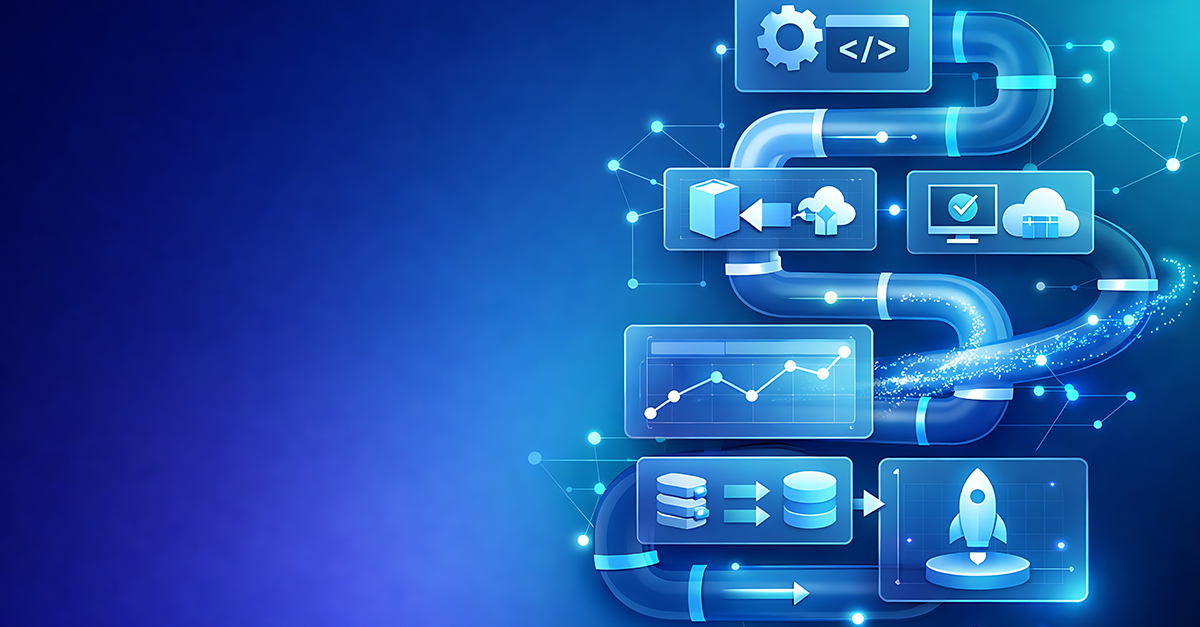
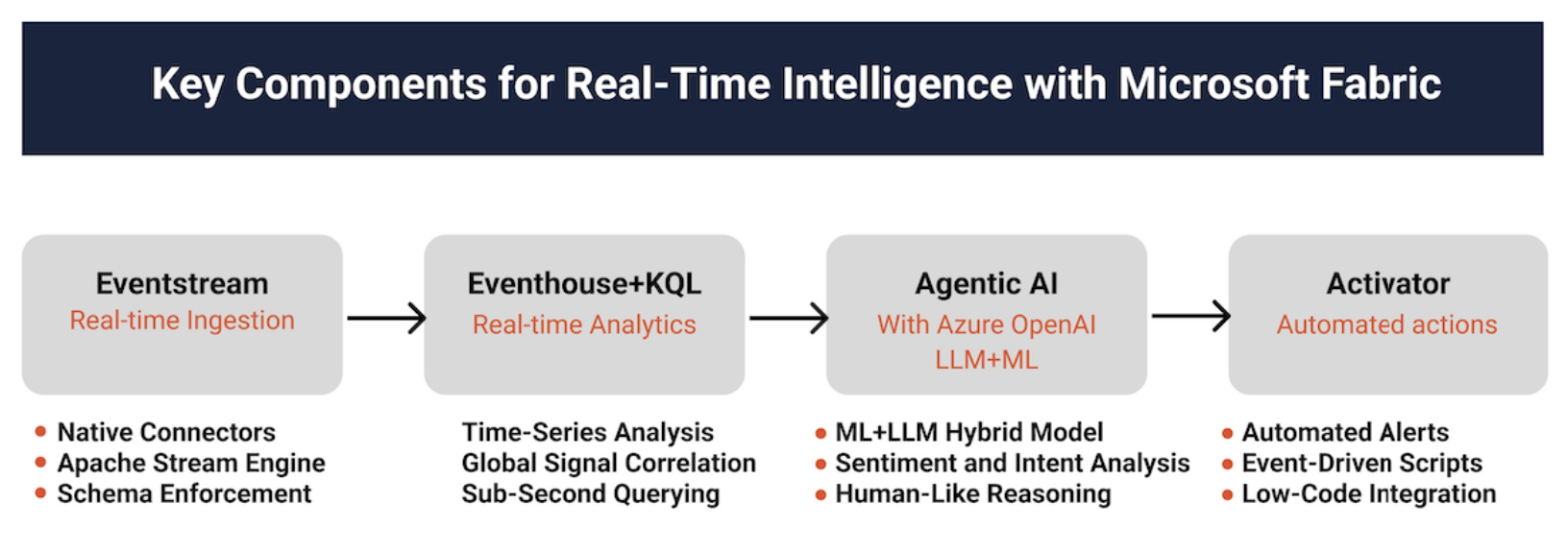
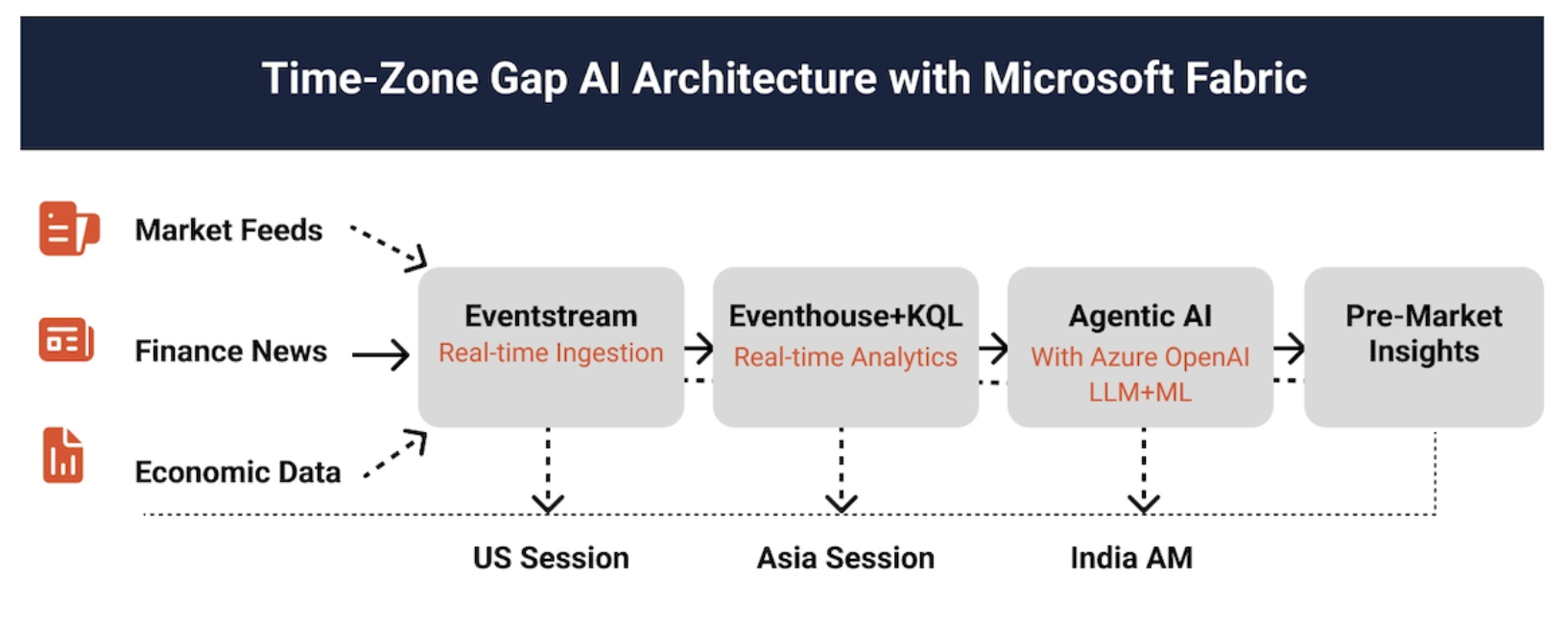
At the foundation of the solution is Fabric Eventstream. Eventstream allows us to ingest data continuously and concurrently from multiple sources:
- Market feeds
- Authentic financial news providers
- Economic indicators
- Custom APIs
- Streaming platforms using Apache Stream engines (Kafka-compatible)
Fabric supports:
- Native connectors
- Custom endpoints
- Data virtualization and data replication
- Schema enforcement and enrichment in-flight
This allows us to connect to any real-time source without building custom ingestion frameworks. In time-zone gap scenarios, completeness is critical. Missing even a single overnight event can distort context and undermine the entire analysis before the market opens.
Also Read: 4 Ways to Leverage Data to Increase Revenue
Authentic News Feeds and Signal Trustworthiness
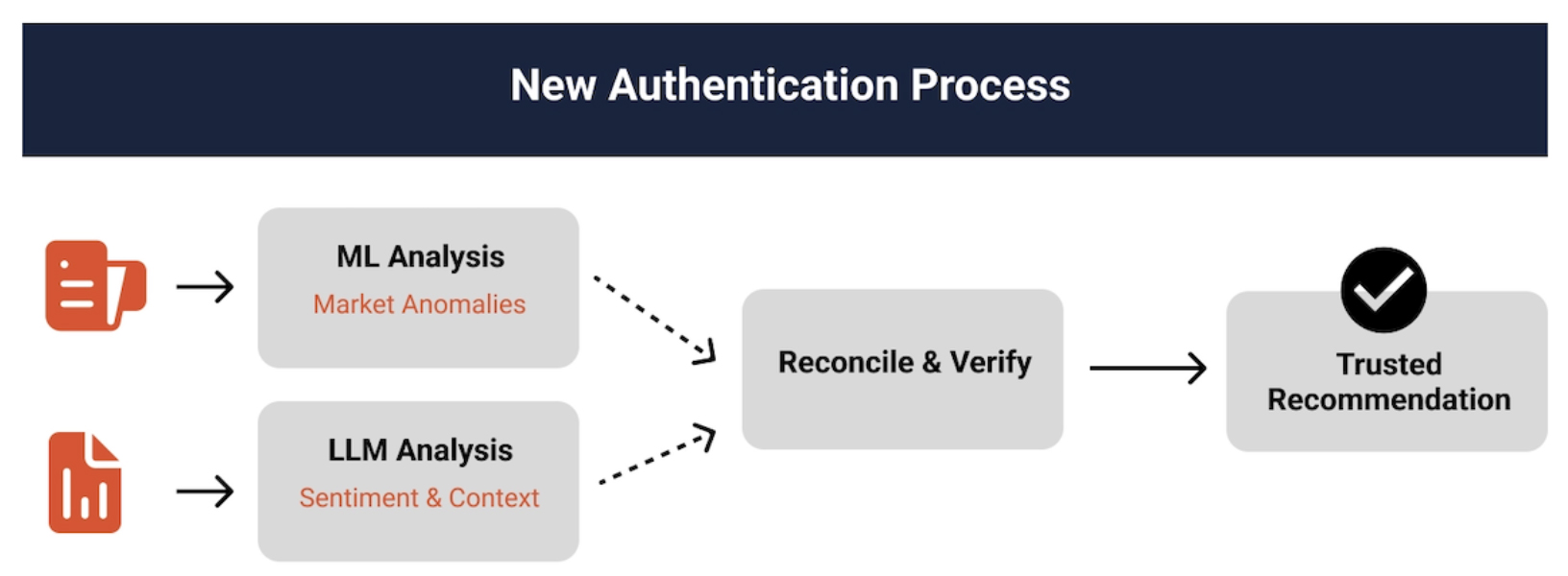
One of the practical challenges in real-time systems is verifying news credibility and impact. Rather than relying on a single signal, we use a hybrid ML and LLM approach to validate relevance:
- Machine learning models detect abnormal market behavior such as unusual volume spikes or volatility shifts
- Azure OpenAI models analyze the underlying news for sentiment, tone, and intent
- Recommendations are generated only when market behavior aligns with narrative sentiment and duplicate or low-signal content has been filtered out
This reconciliation layer reduces false positives and strengthens signal integrity. The outcome is explainable, defensible recommendations grounded in both market data and contextual analysis.
Also Read: The Advanced Analytics Insurance Leaders Need
Real-Time Analytics with Eventhouse and KQL
As data flows through Eventstream, it is written into Eventhouse, Microsoft Fabric’s real-time analytics engine powered by KQL. Eventhouse is purpose-built for high-velocity, time-series workloads. It supports cross-session correlation and delivers sub-second query performance at scale. That capability is critical when analyzing global market movements across time zones.
Using KQL, we continuously evaluate:
- US market close vs Asia open vs India pre-market
- Price gaps across trading sessions
- Sentiment shifts and overnight decay
- Correlations between global indices and local equities
This analysis runs as the data arrives. By the time the Indian market opens, the insights are already structured and decision-ready.
Cost Considerations
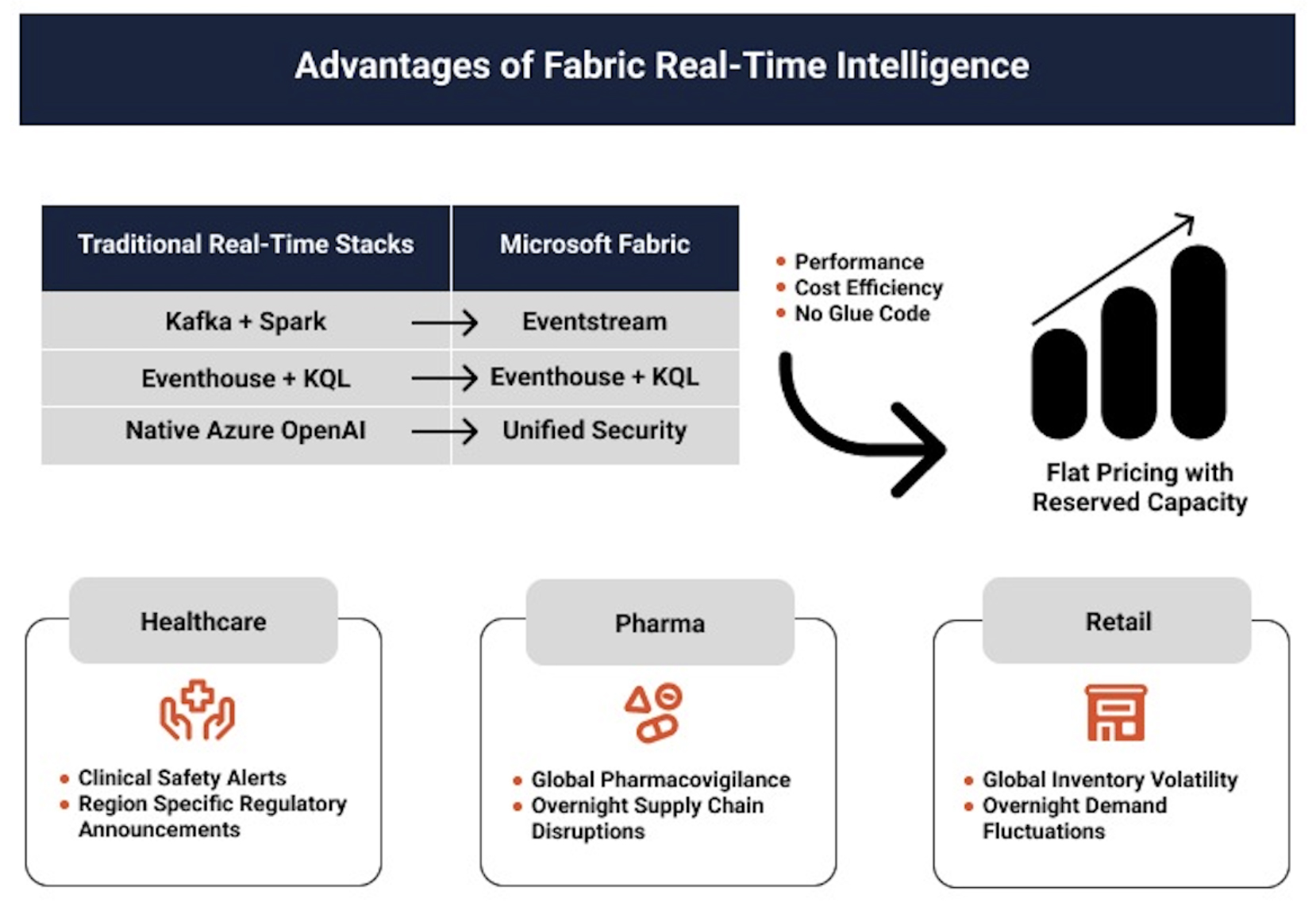
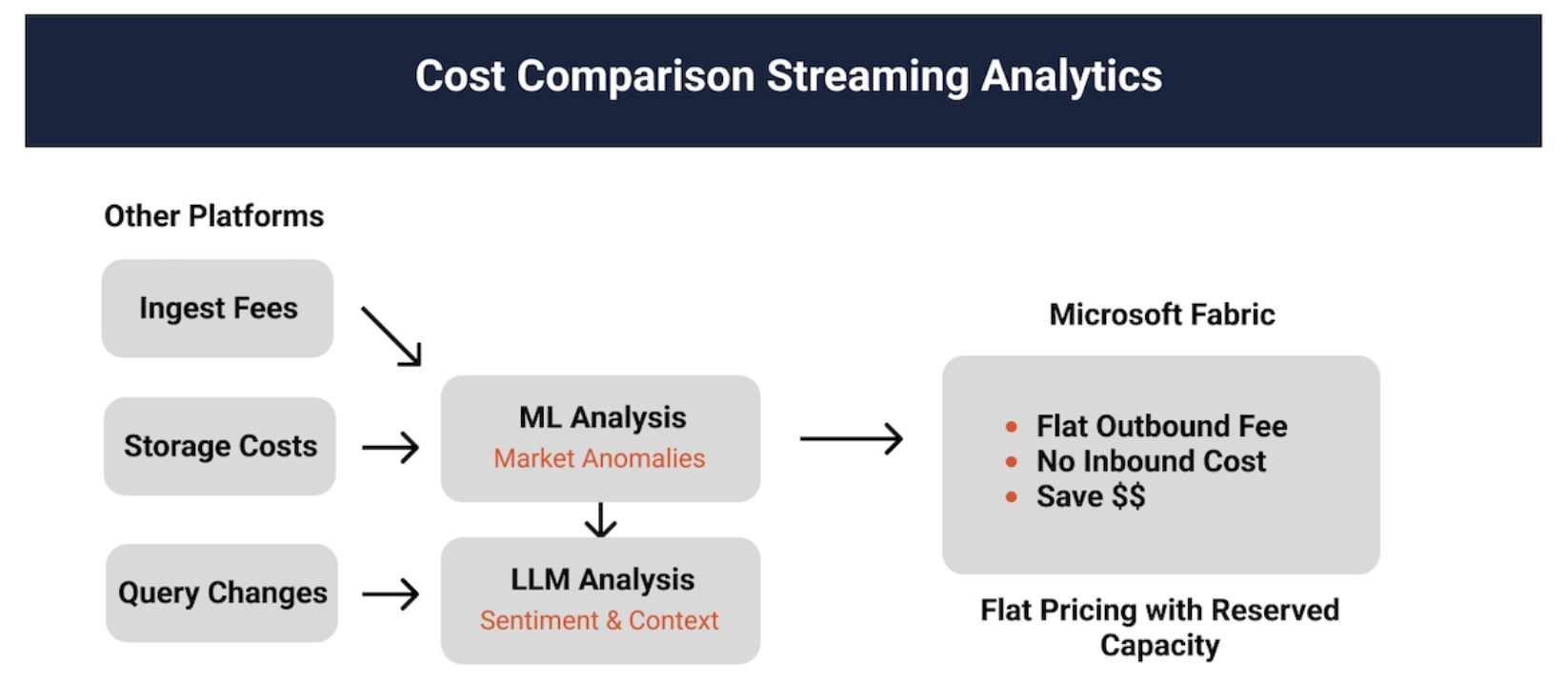
Fabric Eventhouse also provides operational clarity from a cost perspective. There are no inbound ingestion charges, and outbound costs are predictable under reserved capacity. In contrast, traditional streaming architectures that combine Kafka, separate warehouses, and BI tools often accumulate costs across ingestion, storage, and query layers. With Fabric, the economics are simpler and more predictable, which matters for always-on, real-time workloads.
Semantic Models Without Waiting
In many real-time architectures, the BI layer becomes the bottleneck. Data may be streaming in continuously, but dashboards still depend on refresh cycles and duplicated datasets. Fabric removes that friction by providing auto-generated semantic models, supporting for fully customized semantic layers, and providing direct query access over live Eventhouse data. This means there are no scheduled dataset refreshes, no redundant storage layers, and no artificial delay between analytics and visualization. Insights remain live from ingestion to dashboard. The moment the data changes, the view changes.
Agentic AI: From Signals to Decisions
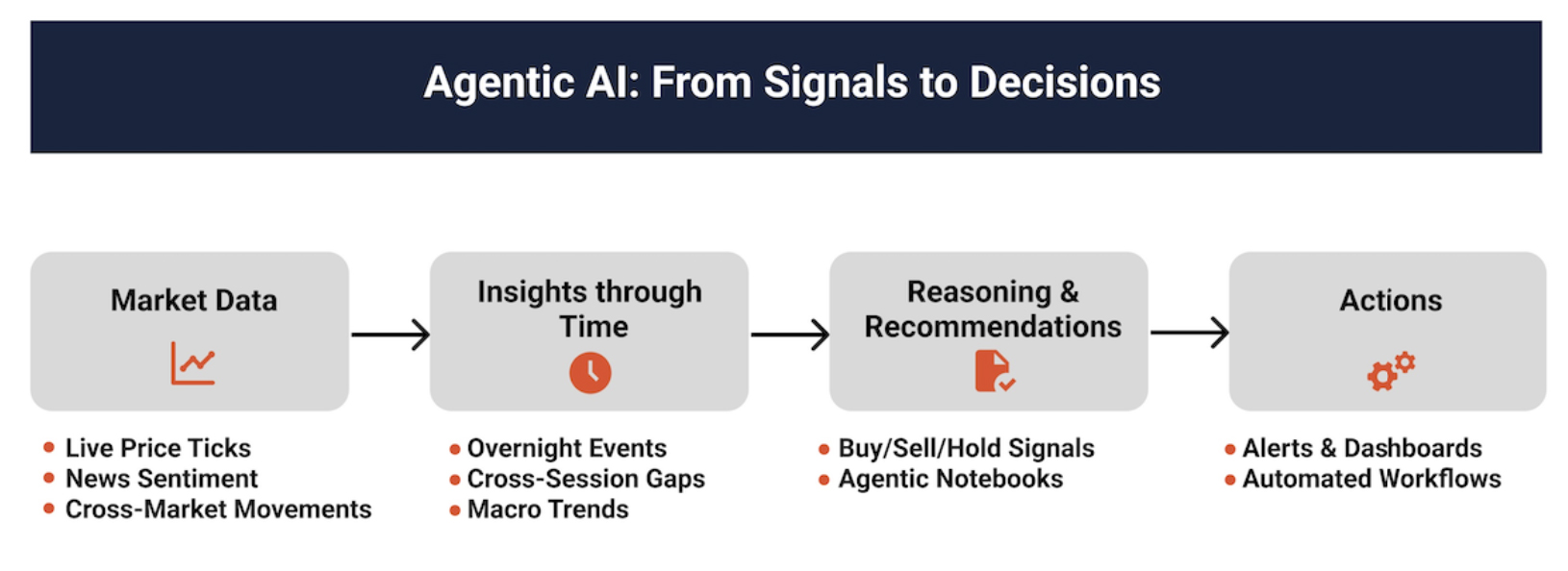
This is where the system moves beyond analytics and becomes agentic. Using Fabric Notebooks integrated with Azure OpenAI, we developed an autonomous AI agent that interprets live signals, understands overnight market context, maps global events to Indian sectors and stocks, and generates Buy, Sell, or Hold recommendations with clear reasoning.
The agent does not replace the analytical layer. It orchestrates it. It brings together KQL-derived indicators, machine learning-based anomaly detection, and LLM-driven contextual reasoning into a single decision framework.
The result is a hybrid ML and LLM architecture where recommendations are grounded in measurable signals and validated context, not just narrative interpretation.
Automated Actions with Activator
Insights lose relevance when they wait in a dashboard. With Fabric Activator, we define real-time conditions such as large overnight gaps, sudden liquidity drops, or sentiment reversals before the market opens. The system continuously monitors for these triggers. When thresholds are met, alerts are generated immediately, agent notebooks execute automatically, and pre-market intelligence is delivered without manual intervention. This closes the loop from event to insight to action, ensuring that signals translate into timely decisions rather than delayed reactions.
Microsoft Fabric vs. Traditional Stack
| Capability | Traditional Stack | Microsoft Fabric |
|---|---|---|
| Real-time ingestion | Multiple tools | Native Eventstream |
| Time-series analytics | Separate engine | Eventhouse (KQL) |
| AI integration | Manual wiring | Built-in Azure OpenAI |
| BI freshness | Refresh-based | Live semantic models |
| Cost model | Fragmented & variable | Predictable & optimized |
| Governance | Tool-by-tool | Unified |
Beyond Finance: The Same Latency Problem Across Industries
The time-zone gap is not unique to capital markets. In healthcare, overnight regulatory updates or clinical alerts can alter treatment pathways before local teams are online. In pharma, global safety signals or supply chain disruptions can emerge in one region and affect manufacturing or distribution in another. In banking, fraud patterns often surface in one market before propagating across regions. In retail, overnight demand shifts or logistics bottlenecks can impact pricing and inventory decisions before stores open.
In each case, the issue is the same. Signals travel faster than organizations respond. Where timing determines risk, cost, or customer impact, the combination of Fabric Real-Time Intelligence and Agentic AI provides a structured way to compress latency between event, interpretation, and action.
Final Thought
The time-zone gap is a structural reality in global operations. It will not disappear. What changes is whether organizations accept the lag or deliberately design around it. Microsoft Fabric Real-Time Intelligence makes it possible to build systems that operate continuously, processing signals and shaping context while teams are offline, so decisions are ready when the day begins. This is not simply faster reporting. It represents a shift from periodic insight to continuous intelligence.